
Why content is dead and impact is what matters
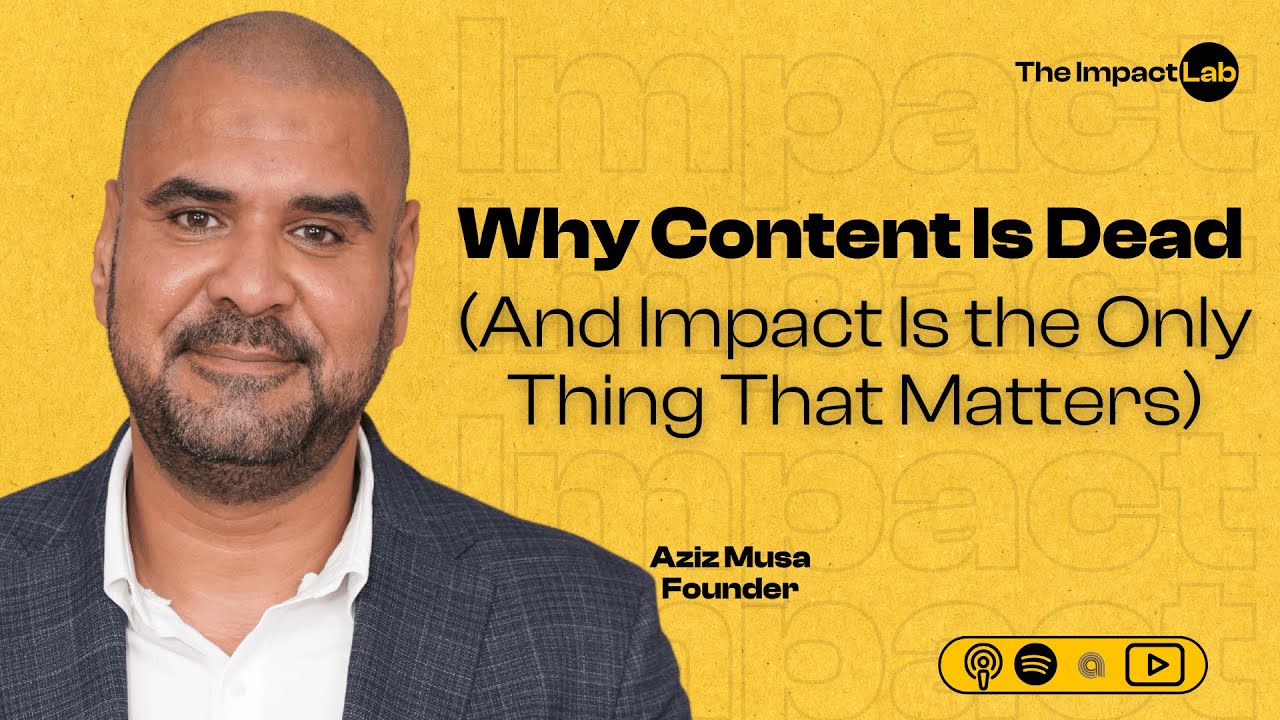
In the launch episode of The Impact Lab, Aziz Musa explains why AI has made content cheap, why impact and attention are what count now, and what a spreadsheet job at lastminute.com taught him about value.
Contents
Content stopped being a way to stand out once AI made it almost free to produce. In the first episode of The Impact Lab, Aziz Musa argues that what separates people and companies now is impact: doing the few things that create real value, and being someone an audience can trust is real. He starts with a story about spreadsheets.
Dreaming in Excel
After graduating, Aziz moved to Dubai, then back to the UK to join lastminute.com in the early 2000s, when contracts still came by fax. His job was to support the team negotiating with suppliers by building cost models: seasons, product types and trip lengths, all combined into one target cost per product. Each model took about a day. He built them day after day until, he says, he was literally dreaming in Excel.
He realised he was not adding value, just getting through spreadsheets. So he taught himself macros and automated the work. A model that took a day now took ten minutes, and he could run hundreds in a day. He told his manager he had finished. His manager did not believe him at first, and then did not know what to give him next.
From spreadsheets to the negotiating table
Aziz worked it out himself. Instead of handing over data, he researched the people his manager was negotiating with: their backgrounds, their roles, the way they behaved. It helped his manager build rapport and find weak points. Soon Aziz was negotiating his own contracts. Because he had built the cost models, he understood suppliers' businesses almost better than they did, and he says he was closing multi-million-dollar contracts in his early twenties.
"Everyone around me was doing their job. But very few people were asking, 'Where's the real value?'"
His lesson is that careers move when you do the things that make an outsized impact and stop doing the things that do not.
Walking away from the boardroom
About ten years before this episode, Aziz became chief executive of a UK listed company, at the time, he says, the youngest public company chief executive in the country. Then he walked away. The money was good, but he felt he was making it for shareholders without adding anything. He moved his family to Sudan to set up a training centre for digital skills. Former colleagues began asking him to run campaigns, and he said yes so his trainees could work on real cases. The centre grew into the company now called Cush Digital. Aziz says it has never advertised; every client has come by referral.
Fewer posts, more result
His example of impact is a client's LinkedIn account. The team looked at the previous month's posts, found three types that outperformed everything else, and the next month published far fewer posts, only in those three formats. Reach, engagement and new followers all rose several times over. The gain came from choosing what to work on.
Content is cheap, attention is scarce
Aziz uses AI every day and sees no shame in it. But AI has made content so easy to make that content on its own is losing its value. Once you could stand out with better copy, sharper visuals or tighter editing. Now someone can generate a hundred Instagram reels in an hour. What is scarce is attention, and the next stage of marketing, he argues, will be about human connection and realness. It is the same argument behind why he later stopped posting content.
Proving you are human
That raises a question: how do you know the person speaking is real? Alan Turing proposed a test in 1950 in which an interrogator tries to tell a person from a machine by asking them questions. Aziz's point is that the question is now reversed: can you prove you are human? So every episode of The Impact Lab opens with a reverse Turing test, a memory only the two people in the conversation could share.
What The Impact Lab is for
The podcast is the knowledge arm of Cush Digital, alongside training and consulting. Aziz started it because he was tired of shows where people talk for an hour and say nothing. Each guest is asked for the two or three things that actually move the needle in their field. The focus is global but Gulf-first, with the UAE, Saudi Arabia, Qatar, Oman, Egypt and Sudan in mind. That focus on substance over volume is also how we approach thought leadership for clients.
Questions people ask
Why does Aziz Musa say content is dead?
Because AI has made content almost free to produce. Better copy, visuals or editing once made a brand stand out; now anyone can generate a hundred reels in an hour. What is scarce is attention, and the next stage of marketing will be about human connection and realness.
What is the reverse Turing test?
Turing's original test asked whether a machine can be told apart from a person. The reverse test asks a person to prove they are human. Every Impact Lab episode opens with one: a shared memory only the host and the guest could know.
What does impact mean in marketing work?
Doing the few things that create real value and dropping the rest. Aziz Musa's example: a client's LinkedIn account published far fewer posts, only in the three formats that worked best, and reach, engagement and new followers all rose several times over.
The two-minute diagnostic shows which pattern your marketing is in
The diagnostic asks nine questions and names the pattern your marketing is stuck in. No call, no pitch, and you get the paper written for that pattern.